In the digital era, cloud infrastructure services have become the backbone of enterprise innovation and growth. For CIOs, CTOs, and IT directors steering mid-to-large enterprises, understanding how to leverage these services in tandem with artificial intelligence (AI) is critical. The fusion of enterprise cloud architecture with AI capabilities enables organizations to build scalable cloud systems that adapt dynamically to evolving business needs.
The Evolution of Enterprise Cloud Architecture
Enterprises today require more than just traditional cloud storage or computing power. The modern landscape demands:
- Flexibility: Systems must accommodate fluctuating workloads.
- Resilience: Infrastructure should ensure high availability and disaster recovery.
- Interoperability: Seamless integration across diverse platforms and applications.
- Security: Robust protection against cyber threats and data breaches.
Cloud providers now offer tailored services that address these requirements, enabling IT leaders to architect environments primed for AI workloads.
Why AI-Ready Cloud Infrastructure Matters
AI workloads introduce unique challenges:
- Massive data volumes requiring efficient processing.
- Intensive compute demands for training and inference.
- Latency sensitivity for real-time analytics.
An AI-ready cloud infrastructure incorporates specialized hardware such as GPUs and TPUs, optimized networking, and scalable storage solutions designed to handle these demands. This ensures that AI models can be developed, deployed, and scaled without bottlenecks or performance degradation.
“Building an Exderaglobal: AI-ready infrastructure is not just about adding compute power; it’s about creating an ecosystem where data flows seamlessly, resources scale automatically, and insights are generated faster.”
Designing Scalable Cloud Systems for Growth
Scalability remains a core attribute of effective cloud infrastructure. Enterprises must design systems that can:
- Scale Horizontally: Add more nodes or instances as demand grows.
- Scale Vertically: Increase resource capacity within existing nodes.
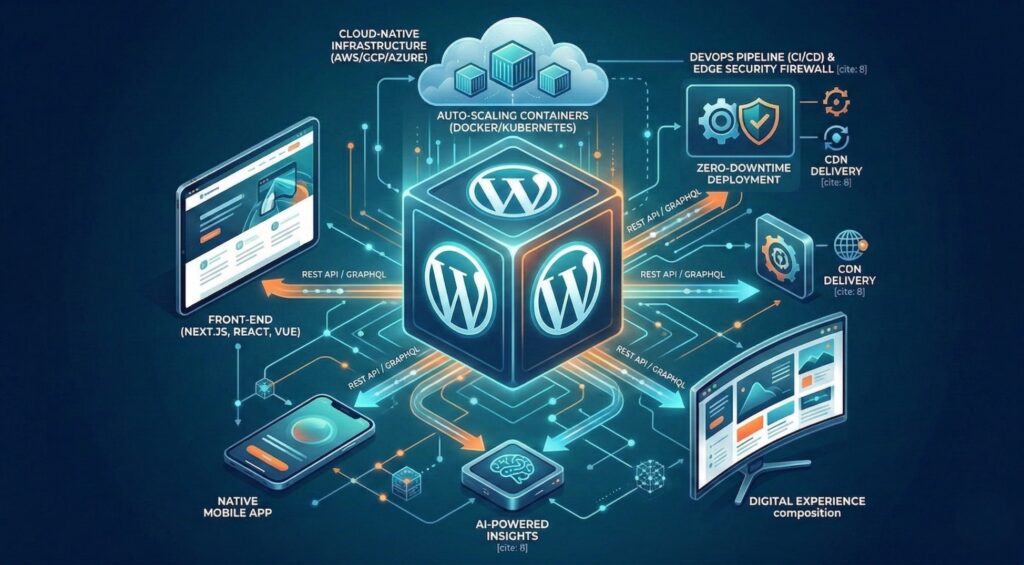
- Automate Scaling: Use orchestration tools like Kubernetes to manage resource allocation dynamically.
This approach allows businesses to optimize costs by paying only for what they use while maintaining performance during peak times.
Key Components of Scalable Cloud Systems:
- Load Balancers: Distribute traffic evenly across resources.
- Microservices Architecture: Break down applications into manageable components.
- Containerization: Enable rapid deployment and portability across environments.
- Monitoring & Analytics: Provide real-time insights into system health and usage patterns.
Leveraging Hybrid and Multi-Cloud Solutions
Enterprises rarely rely on a single cloud provider anymore. Adopting hybrid and multi-cloud solutions offers significant advantages:
- Avoid vendor lock-in by distributing workloads across multiple platforms.
- Optimize performance by selecting the best environment for each workload.
- Enhance resilience through geographic diversity.
Hybrid clouds blend on-premises infrastructure with public clouds, providing control over sensitive data while benefiting from scalable public resources. Multi-cloud strategies enable leveraging unique features from different vendors, improving flexibility.
Challenges Addressed by Hybrid/Multi-Cloud:
- Data sovereignty regulations compliance.
- Cost optimization via workload placement.
- Disaster recovery through redundancy.
Best Practices for Integrating AI with Cloud Infrastructure
To maximize the benefits of AI within cloud environments, enterprises should consider:
- Data Strategy Alignment: Ensure data is clean, accessible, and compliant with governance policies.
- Security Posture Enhancement: Implement encryption, identity management, and continuous threat monitoring.
- Collaboration Between Teams: Foster cooperation between data scientists, developers, and IT operations to streamline deployment pipelines.
- Continuous Performance Tuning: Monitor model accuracy alongside infrastructure metrics to maintain optimal outcomes.
Investing in automation tools helps accelerate model lifecycle management from development to production while reducing manual errors.
Impact on Business Outcomes
Integrating advanced cloud infrastructure with AI capabilities drives tangible business value including:
| Benefit Description Accelerated Innovation | Faster experimentation cycles lead to quicker product launches |
| Improved Customer Experience | Real-time analytics enable personalized interactions |
| Operational Efficiency | Automation reduces manual tasks and operational costs |
| Competitive Advantage | Data-driven insights support strategic decision-making |
Successful enterprises treat their cloud-AI platform as a strategic asset rather than a mere technology stack.
Conclusion: Strategic Imperative for IT Leadership
For CIOs, CTOs, and IT directors leading mid-to-large enterprises, building a foundation that supports both scalable cloud systems and sophisticated AI workloads is no longer optional Saas & Paas Products. Embracing modern enterprise cloud architecture combined with hybrid/multi-cloud strategies ensures resilience, agility, and innovation capacity essential in today’s fast-paced markets.
Investing in an AI-ready cloud infrastructure unlocks new possibilities—from predictive analytics to intelligent automation—paving the way for scalable growth that adapts seamlessly as business demands evolve.